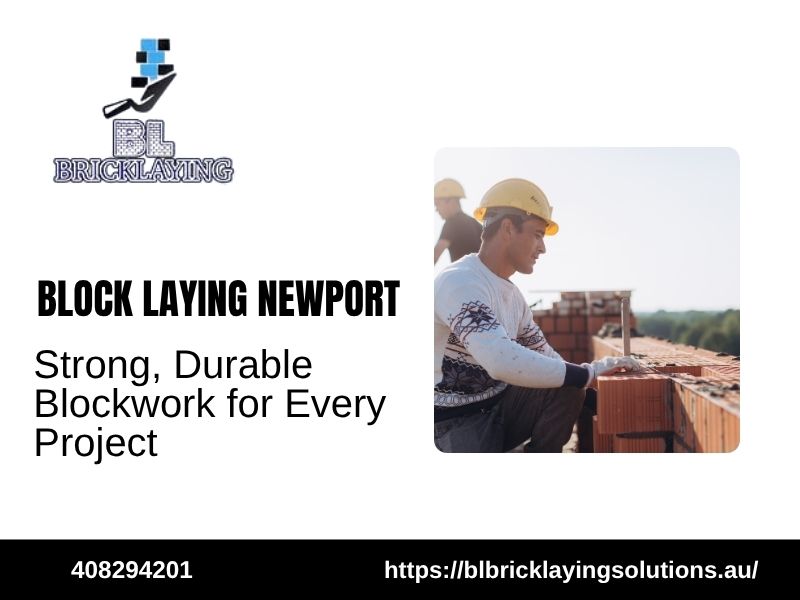
Concrete block laying is one of the most practical building methods available to Newport homeowners and builders. It offers strength, fire resistance, and excellent thermal performance — qualities that matter in a coastal suburb like Newport, where weather and soil conditions can test the durability of any structure. If you’re planning a build or renovation, understanding what block laying involves and why it suits the local area can help you make better decisions.
What Is Block Laying?
Block laying involves constructing walls and structures using concrete masonry units (CMUs), commonly known as besser blocks. Unlike traditional clay bricks, concrete blocks are larger, hollow-core units that can be reinforced with steel and filled with concrete for added strength. This makes them ideal for load-bearing walls, retaining structures, and foundations.
In Newport, where many properties sit on sloped or sandy blocks, concrete block construction is often preferred for its structural reliability and resistance to ground movement.
Why Block Laying Suits Newport NSW Properties
Newport’s location along Sydney’s Northern Beaches means properties frequently deal with:
- Sloping terrain – Common across much of the suburb, requiring solid retaining structures
- Sandy and reactive soils – Which demand robust foundation and wall systems
- Coastal exposure – Salt air and moisture that can degrade weaker building materials over time
- Bushfire considerations – Some areas require fire-resistant construction materials
Concrete block walls address all of these challenges. They’re highly resistant to moisture damage, provide excellent fire ratings, and can be engineered to handle the lateral pressures common in retaining wall applications.
Common Block Laying Projects in Newport
Local block laying specialists typically handle:
- Retaining walls – Critical for managing Newport’s sloped blocks and preventing soil erosion
- Garage and shed construction – Durable, low-maintenance structures
- Boundary and privacy walls – Solid, long-lasting alternatives to timber fencing
- Foundation and footing walls – Structural support for new builds and extensions
- Granny flats and secondary dwellings – Increasingly popular across the Northern Beaches
- Commercial blockwork – Warehouses, storage facilities, and industrial units
Each project requires careful planning around drainage, reinforcement, and council compliance, particularly for retaining walls over a certain height.
Benefits of Choosing Concrete Block Construction
- Durability – Concrete blocks resist weathering, pests, and fire far better than many alternative materials, making them well suited to Newport’s coastal climate.
- Cost efficiency – Block laying is often more economical than brick veneer for larger structural walls, particularly retaining walls and garages.
- Thermal performance – Concrete blocks offer good thermal mass, helping regulate indoor temperatures and reduce energy costs.
- Low maintenance – Once rendered or finished, block walls require minimal upkeep compared to timber or lightweight cladding systems.
- Structural strength – Reinforced block walls can bear significant loads, making them ideal for retaining walls on sloped Newport properties.
Choosing the Right Block Laying Contractor
When hiring a block laying contractor in Newport NSW, consider the following:
- Relevant licensing – Confirm they hold the appropriate NSW trade licence for masonry or blocklaying work.
- Experience with retaining walls – Given Newport’s terrain, this is a critical skill set.
- Engineering knowledge – Larger retaining walls often require an engineer’s certification; a good contractor will coordinate this.
- Local references – Ask for examples of completed local projects.
- Transparent quoting – Get an itemised quote covering materials, labour, and any excavation work required.
Choosing a contractor experienced specifically in block laying — rather than a general builder — often results in stronger, longer-lasting structures.
Council Requirements for Block Laying in Newport
Most retaining walls, boundary walls, and structural blockwork in Newport require council approval or a complying development certificate, especially where walls exceed one metre in height or affect drainage and neighbouring properties. A local contractor familiar with Northern Beaches Council requirements can guide you through the approval process and ensure compliance from the outset.
Block laying offers Newport property owners a durable, cost-effective solution for retaining walls, garages, boundary walls, and structural builds. Given the suburb’s sloped terrain and coastal exposure, concrete blockwork is often the smarter long-term choice over lighter materials. Working with an experienced local contractor ensures your project meets safety standards, council requirements, and stands strong for decades to come.
Frequently Asked Questions (FAQ)
1. How much does block laying cost in Newport NSW? Costs depend on wall height, length, reinforcement requirements, and site access. Retaining walls typically range from a few hundred to several thousand dollars depending on scale and engineering needs.
2. Do retaining walls in Newport need council approval? Yes, in most cases. Retaining walls over one metre in height, or those affecting drainage or neighbouring properties, generally require council approval or certification.
3. Is concrete block laying stronger than brick? For load-bearing and retaining applications, reinforced concrete block walls are generally stronger than standard brick veneer, particularly when filled with concrete and steel reinforcement.
4. How long does a retaining wall take to build? Depending on size and complexity, most residential retaining walls take one to two weeks to complete, including excavation and drainage work.
5. Can block walls be rendered to match my home’s exterior? Yes, concrete block walls can be rendered, painted, or clad to match existing brickwork or exterior finishes, giving a seamless appearance.